

Call us now
07313727081
Call us now
07313727081
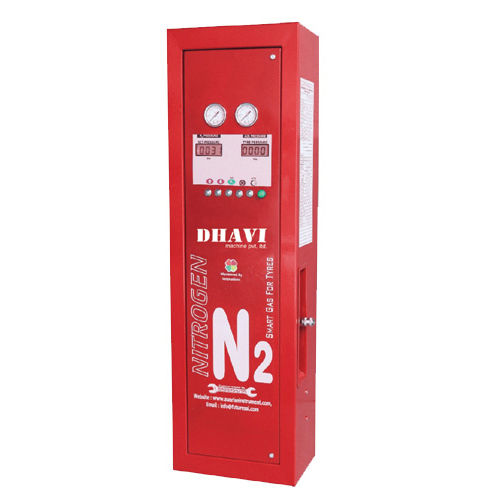
A nitrogen tire inflator is a machine that fills vehicle tires with highly pure nitrogen gas instead of regular compressed air. These devices are made up of an air compressor and a filtration system, often utilizing a technology called Pressure Swing Adsorption (PSA) or membrane separation. This system separates the nitrogen from the ambient air, which is composed of roughly 78% nitrogen, 21% oxygen, and other gases. The result is a stream of nitrogen gas with a purity level typically ranging from 95% to 99%.
The process typically involves:
Air Compression: An air compressor draws in ambient air.
Filtration: The compressed air is then passed through a filter system.
Separation: The filter, through either PSA or membrane technology, allows the smaller oxygen molecules and other gases to pass through while retaining the larger nitrogen molecules.
Inflation: The separated, high-purity nitrogen is then used to inflate the tire. For the best results, the tire is first purged of regular air and then refilled with nitrogen.
Slower Pressure Loss: Nitrogen molecules are larger than oxygen molecules, which makes it harder for them to leak out through the porous rubber of a tire. This means that tires filled with nitrogen maintain their pressure longer, reducing the need for frequent top-ups.
Reduced Corrosion and Oxidation: Regular air contains moisture and oxygen. Over time, oxygen can cause oxidation, which can lead to the deterioration of the tire's internal structure and the corrosion of the wheel's metal components. Nitrogen, being a dry, inert gas, prevents these issues.
More Stable Tire Pressure: Nitrogen is less susceptible to temperature changes than regular air, which contains water vapor that expands and contracts. This results in more stable tire pressure, especially during high-speed driving or extreme weather conditions. Consistent pressure leads to better handling, braking, and fuel efficiency.
Enhanced Safety: The stability of nitrogen in tires reduces the risk of blowouts, which can occur when pressure fluctuates dramatically due to heat build-up. This is a key reason why nitrogen is used in professional auto racing, aviation, and heavy-duty commercial vehicles.
Cost: The cost of filling tires with nitrogen is significantly higher than using regular air, which is often free.
Limited Availability: Nitrogen filling stations are not as common as air compressors, making it inconvenient to find a place for a top-up, especially during a road trip.
Still Requires Maintenance: While nitrogen-filled tires lose pressure more slowly, they are not completely immune to pressure loss. You still need to check your tire pressure regularly and top it up as needed. Punctures and valve leaks will still cause pressure loss regardless of the gas used.

Price:


 |
Dhavi Machine Private Limited
All Rights Reserved.(Terms of Use) Developed and Managed by Infocom Network Private Limited. |




 Send Inquiry
 Send Inquiry
 Send SMS